
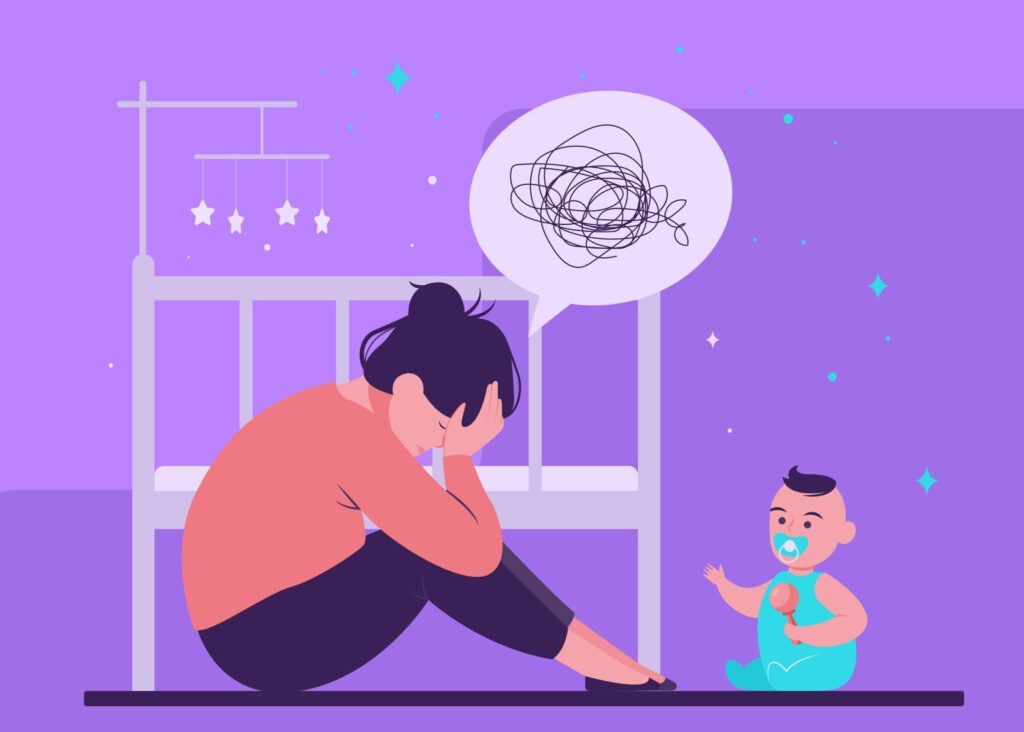
What are baby blues?
Baby blues are common emotional changes after birth that may include tearfulness, mood swings, and feeling overwhelmed. They usually begin within the first few days after delivery and resolve within two weeks without treatment.
What is postpartum anxiety?
Postpartum anxiety is a perinatal mood and anxiety disorder that involves persistent worry, intrusive thoughts, physical anxiety symptoms, and difficulty relaxing or sleeping. Symptoms last longer than two weeks and often worsen without support.
When should I seek help?
If symptoms feel intense, interfere with daily functioning, involve intrusive or distressing thoughts, or last longer than two weeks, professional support is recommended.
Understanding Emotional Changes After Birth Through a Reproductive Mental Health Lens
The postpartum period brings enormous physical, emotional, and identity changes. Hormonal shifts, sleep deprivation, relationship adjustments, and the responsibility of caring for a newborn can affect even the most prepared parents.
At Reproductive Mental Health & Wellness, we view postpartum emotional health through the broader lens of reproductive mental health. This approach recognizes that pregnancy, birth, fertility challenges, loss, and parenting transitions are deeply connected experiences that deserve specialized care.
Many new parents ask whether what they are feeling is “normal” or a sign that something more is happening. Understanding the difference between baby blues and postpartum anxiety can help reduce fear, shame, and delays in getting support.
What Are the Baby Blues?
Common and Temporary Emotional Changes
Baby blues affect up to 80 percent of new parents. These symptoms typically appear within the first few days after birth and are linked to hormonal fluctuations, physical recovery, and the shock of caring for a newborn.
Common baby blues symptoms include:
- Tearfulness without a clear reason
- Mood swings
- Irritability
- Feeling overwhelmed
- Mild anxiety
- Difficulty sleeping even when the baby sleeps
These feelings can be intense, but they tend to come and go. Importantly, parents experiencing baby blues are still able to function, bond with their baby, and feel moments of joy alongside the distress.
How Long Baby Blues Usually Last
Baby blues usually peak around days four or five postpartum and resolve within two weeks. As hormones stabilize and parents adjust, emotional intensity often decreases.
If symptoms are improving over time, this is a reassuring sign.
What Is Postpartum Anxiety?
More Than Everyday Worry
Postpartum anxiety is a type of perinatal mood and anxiety disorder. It goes beyond normal new parent worries and becomes persistent, intrusive, and difficult to manage.
Unlike baby blues, postpartum anxiety does not resolve on its own and often worsens without support.
Common Symptoms of Postpartum Anxiety
Symptoms may include:
- Constant or excessive worry about the baby’s health or safety
- Intrusive thoughts or images that feel distressing or frightening
- Racing thoughts
- Difficulty relaxing
- Physical symptoms such as heart palpitations, nausea, dizziness, or shortness of breath
- Trouble sleeping even when exhausted
- Feeling on edge or unable to enjoy time with the baby
Intrusive thoughts are especially common in postpartum anxiety. These thoughts are unwanted, upsetting, and not aligned with a parent’s values. Having them does not mean someone wants to harm their baby.
Key Differences Between Baby Blues and Postpartum AnxietyDuration
Baby blues resolve within two weeks. Postpartum anxiety lasts longer and often intensifies.
Intensity
Baby blues involve emotional ups and downs that feel manageable. Postpartum anxiety feels consuming and difficult to control.
Functioning
With baby blues, parents can generally care for themselves and their baby. Postpartum anxiety interferes with daily functioning, relationships, and rest.
Thought Patterns
Postpartum anxiety is marked by persistent worry and intrusive thoughts that feel distressing and repetitive.
Why Postpartum Anxiety Is Often Missed
Postpartum anxiety frequently goes undiagnosed because it does not always involve sadness. Many parents believe anxiety means they are being vigilant or responsible.
Others fear judgment or worry that sharing intrusive thoughts could result in losing their baby. This fear keeps many parents silent.
At Reproductive Mental Health & Wellness, we normalize these experiences and provide a safe space to talk openly without fear or shame.
Risk Factors That Can Increase Vulnerability
Postpartum anxiety can affect anyone, but certain factors increase risk:
- History of anxiety or depression
- Previous pregnancy loss or infertility
- Traumatic birth or medical complications
- NICU stays
- Lack of social support
- Sleep deprivation
- High expectations of oneself as a parent
Reproductive mental health care recognizes how past reproductive experiences shape postpartum emotional health.
When to Seek Professional Support
Signs It Is Time to Reach Out
Consider seeking support if:
- Symptoms last longer than two weeks
- Anxiety feels constant or escalating
- Intrusive thoughts cause distress or fear
- Sleep feels impossible even when given the opportunity
- You feel disconnected from yourself or your partner
- Daily tasks feel overwhelming
Early support leads to faster recovery and improved well-being.
How Therapy Helps Postpartum Anxiety
Specialized Reproductive Mental Health Therapy
Postpartum anxiety responds well to therapy with clinicians trained in perinatal mental health. Treatment focuses on understanding symptoms, reducing distress, and restoring a sense of safety and confidence.
Therapy may include:
- Psychoeducation about anxiety and intrusive thoughts
- Cognitive and behavioral strategies
- Trauma-informed approaches when needed
- Support for identity changes and relationship shifts
For California residents, postpartum anxiety therapy is available through secure teletherapy, allowing access to specialized care regardless of location.
A Message From Reproductive Mental Health & Wellness
“As therapists who specialize in reproductive mental health, and as people who have lived through many of these experiences ourselves, we know how isolating postpartum anxiety can feel. You are not broken, and you are not alone. Support can make this season feel manageable again.”
Supporting Your Healing in California
Reproductive Mental Health & Wellness serves individuals throughout California via teletherapy. Whether you are navigating early postpartum weeks in San Diego, adjusting to parenthood in Los Angeles, or living in a more rural area, specialized care is accessible.
Our clinicians are licensed in California and trained specifically in perinatal mood and anxiety disorders. We understand the emotional complexity of postpartum experiences and meet clients with compassion and expertise.
How This Blog Supports, Not Replaces, Care
This article is educational and supportive, but it does not replace therapy. If you are experiencing symptoms that concern you, reaching out to a qualified professional is an important step.
For those seeking postpartum depression therapy in California or postpartum anxiety therapy in California, individualized treatment provides the highest level of support.
Final Thoughts: Trust Your Experience
If something feels off, that matters. You do not need to wait until symptoms become unbearable to ask for help.
Reproductive mental health care honors the full emotional reality of parenthood. With the right support, healing is possible.