
The automotive industry operates on precision, timing, and strict quality standards. Every vehicle assembled on a production line relies on thousands of components that must arrive at the right place, at the right time, and in perfect condition. From delicate electronic sensors to heavy mechanical parts, each component requires protection during transportation, storage, and handling. This is where automotive packaging becomes an essential part of the manufacturing ecosystem.
Automotive packaging is not simply about placing parts in boxes or containers. It involves carefully engineered packaging systems designed to protect components, improve logistics efficiency, reduce waste, and support the demanding pace of automotive production. As supply chains become more global and vehicles incorporate more advanced technologies, packaging solutions must continue evolving to meet the industry’s needs.
Understanding the role of automotive packaging helps manufacturers, suppliers, and logistics providers maintain quality while improving efficiency across the entire supply chain.
The Role of Packaging in Automotive Manufacturing
Automotive manufacturing is built on highly coordinated supply chains. Vehicle manufacturers rely on a network of suppliers that produce everything from microchips and sensors to engines, glass, and interior components. These parts must move efficiently between suppliers, warehouses, and assembly plants.
Automotive packaging helps maintain this flow by protecting components during transportation and ensuring they arrive ready for installation. Without proper packaging, parts could become scratched, dented, contaminated, or otherwise damaged before they ever reach the production line.
Packaging solutions also support organized handling and storage. When components are packaged correctly, they can be easily stacked, transported, and retrieved by warehouse teams and manufacturing staff. This reduces the time required to manage parts and keeps production moving without interruption.
In modern automotive manufacturing, packaging is integrated into the supply chain strategy. Companies carefully design packaging solutions that align with production schedules, inventory management systems, and transportation networks.
Protecting Automotive Parts During Transportation
Automotive components often travel long distances before reaching assembly plants. Parts may be shipped across states, countries, or even continents. During this journey, they encounter a variety of environmental and mechanical stresses.
Vibration from trucks and cargo containers, sudden impacts during loading and unloading, and exposure to temperature and humidity changes can all threaten the integrity of automotive parts. Automotive packaging is engineered to minimize these risks.
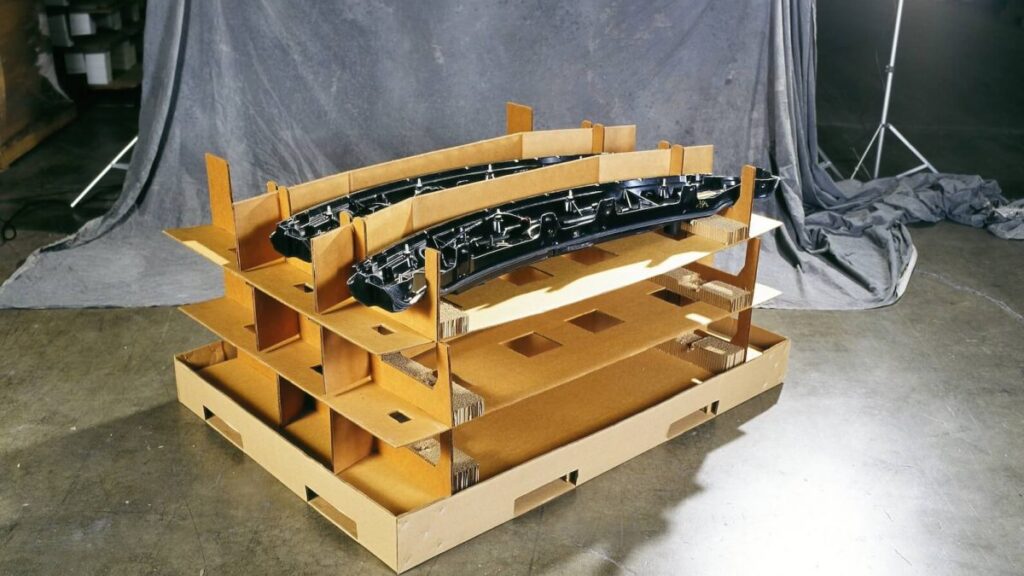
Protective cushioning materials absorb shocks that occur during transit. Custom inserts help keep components securely positioned so they do not shift inside containers. This prevents collisions between parts that could cause scratches, dents, or structural damage.
Some components require additional protection. Electronic modules, for example, may need anti-static packaging materials to prevent electrostatic discharge. Metal components might require corrosion-resistant packaging that protects them from moisture during long shipments.
By addressing these risks, well-designed automotive packaging ensures that parts arrive at their destination in the same condition in which they were manufactured.
Custom Packaging Solutions for Unique Components
The automotive industry produces an enormous variety of components, and each part has its own packaging requirements. Lightweight plastic parts require different packaging than heavy steel components, while delicate sensors demand more protection than durable mechanical assemblies.
For this reason, many companies develop customized automotive packaging solutions tailored to specific parts. Packaging engineers analyze the dimensions, weight, fragility, and handling requirements of each component to determine the most effective packaging design.
Custom packaging may include molded trays, foam inserts, corrugated partitions, plastic containers, or metal racks. These solutions keep parts organized and secure while making them easy to access when needed.
For example, windshield glass must be protected against impact and scratching, so specialized racks or separators are often used to keep each piece stable and isolated. Meanwhile, smaller parts such as fasteners or electronic modules may be packaged in compartmentalized trays that prevent mixing and simplify inventory management.
Custom-designed automotive packaging improves both protection and operational efficiency throughout the supply chain.
Supporting Just-in-Time Production Systems
Most modern automotive manufacturers rely on just-in-time production systems. This approach minimizes inventory by delivering parts exactly when they are needed for assembly. While this method improves efficiency and reduces storage costs, it also requires extremely reliable logistics operations.
Packaging plays a major role in supporting just-in-time manufacturing. Containers must be easy to handle, quick to open, and designed to allow fast access to components.
Many automotive packaging solutions are designed to move seamlessly from transportation to the production floor. Stackable containers, modular trays, and ergonomic packaging designs allow workers to remove parts quickly and safely during assembly.
This level of efficiency helps maintain a steady production rhythm and prevents delays that could disrupt manufacturing schedules.
Reusable Packaging in Automotive Supply Chains
Sustainability is becoming a major priority across the automotive industry. Manufacturers are seeking ways to reduce waste and minimize their environmental impact while maintaining operational efficiency.
Reusable packaging systems are one of the most effective strategies for achieving these goals. Instead of relying on single-use materials that are discarded after delivery, many companies use returnable packaging containers that can be reused for multiple shipping cycles.
Reusable automotive packaging often includes durable plastic bins, collapsible bulk containers, and metal racks designed to withstand repeated use. These containers travel between suppliers and manufacturers in closed-loop systems, reducing the need for disposable packaging materials.
Over time, reusable packaging can significantly reduce waste and lower overall packaging costs. Many systems are also designed to fold or collapse when empty, making return transportation more efficient.
As sustainability initiatives continue to grow across the automotive sector, reusable packaging solutions are becoming an increasingly common part of modern supply chains.
Enhancing Warehouse Organization and Storage
Automotive manufacturers and suppliers manage vast inventories of components, often storing thousands of unique parts in warehouses and distribution centers. Effective packaging plays a key role in organizing these inventories and improving warehouse efficiency.
Packaging systems designed for stackability allow warehouses to make better use of vertical storage space. Standardized container sizes help simplify storage layouts and improve inventory tracking.
Proper labeling and clear packaging structures also make it easier for warehouse staff to identify and retrieve parts quickly. When components are packaged in an organized manner, picking errors become less common and order fulfillment becomes faster.
Well-designed automotive packaging contributes to more efficient warehouse operations and better overall inventory management.
Packaging for Electric Vehicles and Advanced Technologies
The automotive industry is undergoing major technological transformation as electric vehicles and advanced driver assistance systems become more common. These innovations introduce new types of components that require specialized packaging solutions.
Electric vehicle batteries, for example, are large, heavy, and sensitive to environmental conditions. Packaging for these components must provide structural support while protecting them from vibration and impact during transportation.
Electronic control units, cameras, and sensors used in advanced safety systems require packaging that protects against electrostatic discharge and contamination. These components often travel in anti-static containers with protective cushioning designed to preserve their integrity.
As automotive technology continues to advance, automotive packaging will need to evolve to accommodate new types of components and manufacturing processes.
Reducing Supply Chain Costs Through Smart Packaging
While packaging adds cost to the manufacturing process, it can also create significant savings when designed effectively. Well-engineered automotive packaging helps reduce damage, improve transportation efficiency, and streamline warehouse operations.
Reducing damaged parts alone can save manufacturers substantial amounts of money. When components arrive intact and ready for installation, production delays are minimized and replacement costs are avoided.
Optimized packaging also improves transportation efficiency by allowing more parts to be shipped in fewer loads. When containers are designed to maximize space utilization in trucks and shipping containers, companies can lower freight costs and reduce fuel consumption.
These improvements make packaging a strategic investment rather than simply an operational expense.
Innovation and the Future of Automotive Packaging
The future of packaging in the automotive industry will likely involve greater integration of technology and data-driven logistics systems. Smart packaging solutions are already emerging that incorporate tracking technologies such as RFID tags and barcode systems.
These technologies allow companies to monitor packaging assets throughout the supply chain. Businesses can track reusable containers, monitor inventory movement, and gain better visibility into logistics operations.
Material innovation is also shaping the future of packaging. Lightweight yet durable materials are being developed to improve protection while reducing shipping weight and environmental impact.
As supply chains become increasingly connected and automated, packaging will play an even more important role in supporting efficient logistics and manufacturing processes.
Why Automotive Packaging Is Essential to the Industry
Automotive packaging is often overlooked compared to the vehicles themselves, but it plays a vital role in keeping the industry running smoothly. Without reliable packaging systems, automotive supply chains would struggle to maintain the quality, speed, and efficiency required for modern manufacturing.
By protecting components, supporting just-in-time production, improving warehouse organization, and reducing transportation costs, automotive packaging helps manufacturers operate with greater confidence and efficiency.
As the automotive industry continues to evolve with new technologies and sustainability goals, packaging will remain a key part of the supply chain infrastructure that supports global vehicle production.