
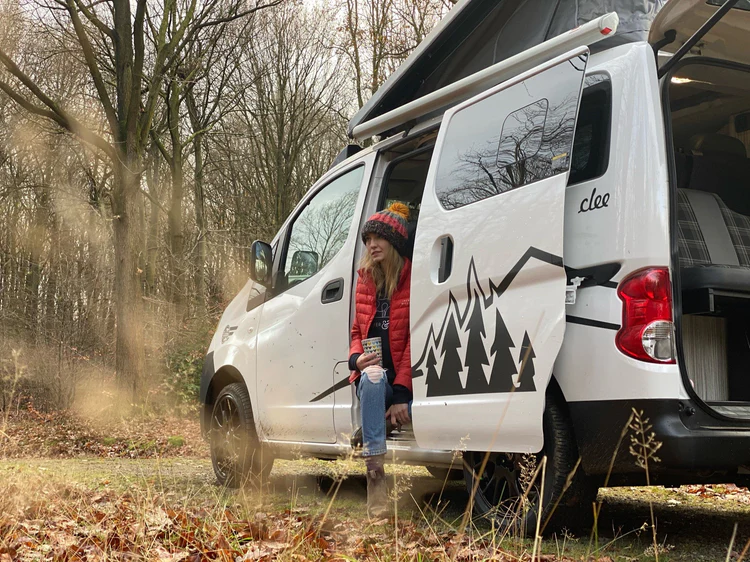
For most people, life follows a familiar pattern. Work during the week, short windows of time at the weekend, and the occasional holiday that never quite feels long enough. Travel becomes something that has to be planned, scheduled and justified — rather than something that simply happens.
That is beginning to change. Not because people suddenly have more time, but because they are finding better ways to use it. The rise in demand for small campervans for sale reflects a growing interest in vehicles that do more than just get from A to B. These are vehicles that quietly expand what is possible within the time people already have.
The weekday reality: work doesn’t stop, but it evolves
Take a typical scenario. Someone working in an office — structured hours, a routine that rarely changes, and a commute that feels predictable to the point of repetition. Traditionally, the idea of escaping to the coast or countryside midweek would feel unrealistic. There simply isn’t enough time to make it worthwhile.
Now consider the same routine with a compact campervan. The working day ends, and instead of heading home out of habit, the journey continues. Within an hour or two, you are parked by the sea or tucked into a quiet rural setting. No unpacking, no booking complications, no pressure to make it a “big trip”. Just a change of environment.
By morning, nothing has changed in terms of responsibilities. You can still return, still work, still operate as normal. But the experience around that routine has shifted completely.
The weekend, redefined
Weekends often disappear faster than expected. Travel time, packing, accommodation logistics — all of it eats into the limited hours available.
A small campervan removes much of that friction. There is no need to prepare extensively or commit to fixed plans. You can leave when you want, stop where it feels right, and return when it suits you.
This transforms how weekends are used. Instead of waiting for the “right time” to travel, smaller, more frequent trips become part of normal life. A quiet evening in the countryside. A sunrise by the coast. A simple overnight stay that feels far removed from routine, despite requiring very little effort.
Affordable travel without compromise
Cost has always been a barrier to regular travel. Hotels, transport, dining — it adds up quickly, which is why many trips are limited to a few times a year.
Campervan travel changes that equation. The UK, and much of Europe, is supported by an extensive network of campsites designed specifically for this type of vehicle. These sites offer everything from basic stopovers to beautifully maintained locations with full facilities — electric hook-up, showers, waste disposal and more.
The experience is simple. Arrive, park, connect and settle in. No queues, no check-in desks, no rigid schedules. Just space, quiet and time to enjoy it.
Because the costs are lower and more predictable, travel becomes something that can happen more often. Not as a rare event, but as a regular part of life.
Designed for real-world use
One of the most important aspects of these vehicles is how easily they integrate into everyday environments. Unlike larger campervans, compact models are designed to behave like normal cars when needed.
They are low enough to access most car parks, including underground spaces. They are easy to manoeuvre through towns and cities. They do not demand special routes or constant planning.
This is what makes them viable as a primary vehicle. They do not interrupt daily life — they fit into it.
A space that adapts to you
Inside, the focus is not on excess, but on usability. Everything is designed to serve a purpose. Seating becomes sleeping space. Storage is integrated without being intrusive. Cooking facilities are compact but practical.
For some, that means a quiet place to unwind after work. For others, it becomes a base for longer trips, outdoor activities or even remote working. The vehicle adapts to the individual, rather than requiring the individual to adapt to the vehicle.
The emotional shift: from planning to possibility
Perhaps the most significant change is not physical, but psychological. When travel becomes easier, it becomes more frequent. When it becomes more frequent, it becomes normal.
The idea of “escaping” begins to lose its weight. It is no longer something reserved for holidays or special occasions. It becomes part of how life is experienced — small, regular changes in environment that make a meaningful difference.
That might be an evening by the water after a long day. A quiet night under open skies. Or simply the knowledge that leaving is always an option.
A vehicle that extends your life, not replaces it
What makes small campervans so compelling is not that they replace anything, but that they add to what is already there. They do not require a new lifestyle, a new schedule or a new way of thinking.
They simply create more opportunities within the life you already have.
In a world where time feels increasingly limited, that is perhaps the most valuable feature of all — not more space, not more equipment, but more freedom, available at the turn of a key.